
Loading...
Serving DeLand, FL and surrounding areas. (386) 327-0080
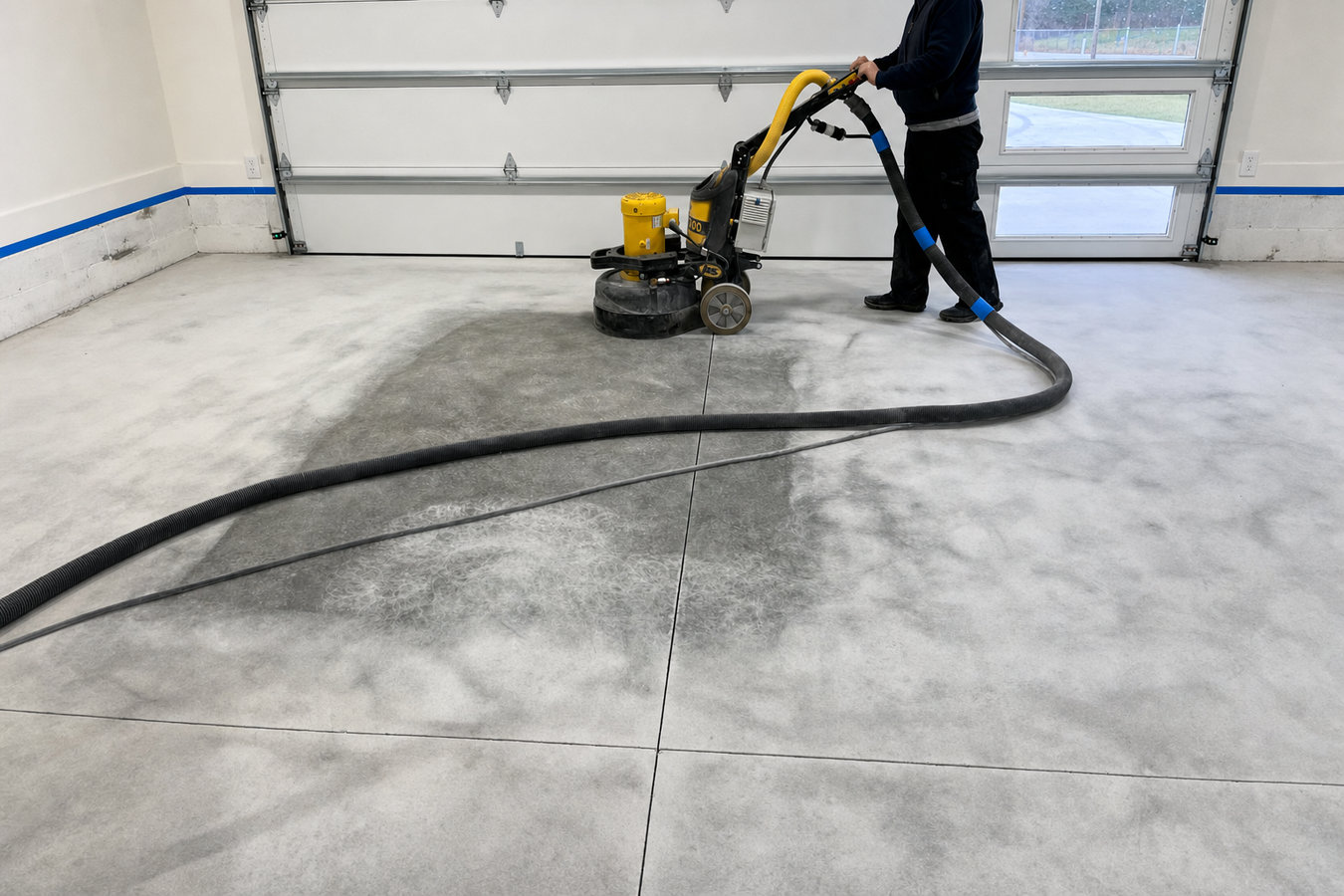
A coating applied to unprepared concrete will peel. We grind the slab down to solid material, remove old coatings and adhesives, and leave you a surface that actually bonds - so whatever goes on top stays on.
Concrete grinding in DeLand uses diamond-tipped machines to shave the top layer of a slab, removing old coatings, stains, adhesives, and unevenness so the surface is clean and open - most residential jobs are completed in one day, with larger areas taking two.
Think of it like sanding wood before you paint it. If you skip that step and apply a coating directly to a rough, dirty surface, the new material has nothing solid to grab on to - and it will peel, bubble, or crack within months. In DeLand's humid climate, that failure happens even faster because moisture trapped beneath a poorly bonded coating pushes it off the slab from underneath. Grinding opens up the concrete pores so what goes on next - whether that is an epoxy, a sealer, or a self-leveling overlay - can bond tightly and last for years. Our concrete sealing service is a common follow-up step once the prep is done.
Grinding is also used on its own to fix trip hazards - those raised edges where one section of a driveway or walkway has settled higher than the next. In DeLand, sandy soil movement makes these joints extremely common, and grinding down the raised section is usually faster, cheaper, and more permanent than replacing the slab.
If you have an epoxy or painted coating on your garage floor and it is starting to lift, peel, or form bubbles, the original surface was not properly prepared before the coating went on. In DeLand's humid climate, moisture trapped beneath a poorly bonded coating pushes it off the slab. Grinding the floor back down and starting fresh with proper prep is the only reliable fix.
If you can feel or see a step or ridge where your driveway meets the sidewalk, or where two patio sections have shifted apart, that is a trip hazard - and exactly what concrete grinding is designed to fix. In DeLand's older neighborhoods, sandy soil movement over decades makes these uneven joints very common. A grinder shaves down the raised edge so the transition is smooth and safe.
If stains, glue residue from old tile, or layers of old paint just will not budge after cleaning, grinding is the most effective solution. This is especially common in DeLand homes from the 1960s and 1970s that had vinyl tile or linoleum installed directly on the slab - when that flooring is removed, the adhesive underneath requires mechanical grinding to clear.
If your contractor has told you the floor is not flat enough for tile, luxury vinyl plank, or an epoxy coating, surface grinding is how that problem gets solved. Even a small dip or hump in the slab can cause new flooring to crack, rock, or separate at the seams over time. Getting the slab properly leveled before installation prevents a much more expensive repair later.
We handle the full range of concrete surface preparation - from light cleaning grinds before a sealer goes down, to heavy material removal on floors covered in thick old coatings or decades of adhesive. Every job uses dust-controlled equipment: industrial vacuums run alongside the grinder and capture dust at the source, so it does not settle throughout your home. After grinding, we inspect the surface for any spots that need a second pass and confirm the floor is at the right profile for whatever is going on next. Our concrete sealing service and our concrete floor stripping and removal service are natural companions to grinding - sealing locks in a prepared surface, while stripping handles flooring materials that need to come off before the slab can be ground.
We also do trip hazard grinding for driveways, walkways, and commercial entry points. One section of slab rising higher than the next is a liability waiting to happen, and in most cases we can grind down the raised edge in a few hours without touching the rest of the surface. The repair is permanent and looks clean, with no patching compound to crack or chip later.
For homeowners getting ready to apply epoxy, sealer, or a decorative finish - opens the slab so the new material bonds correctly.
For floors with paint, epoxy, tile adhesive, or linoleum glue that needs to come off before the next step.
For driveways, walkways, and patios where one slab section has settled higher than the next - grinds the raised edge smooth and safe.
For slabs with high spots, ridges, or surface unevenness that would cause new flooring to rock or crack if left unaddressed.
DeLand sits in Volusia County where average relative humidity regularly exceeds 70 to 80 percent for much of the year. After grinding, moisture in the air slows the drying process - which means contractors sometimes need to run fans or dehumidifiers before any coating can go on. If that step gets skipped and a sealer or epoxy is applied to a surface that still holds moisture, the coating can peel or bubble within months. DeLand homeowners in Orange City and Deltona deal with the same humidity conditions, and the same moisture discipline applies across the region.
DeLand's historic neighborhoods and surrounding subdivisions include a large number of homes built in the 1940s through 1970s - slabs that have had decades to settle, crack, and absorb staining from vinyl tile adhesive, oil, and fertilizer. That era of slab often needs more grinding passes to clear old material fully, and the sandy soils common in Volusia County mean uneven joints between driveway sections are the rule, not the exception. The outdoor concrete on those properties is also exposed to intense UV radiation and year-round rain, which breaks down the surface layer gradually - grinding removes the damaged top and leaves a solid base ready for sealing or coating. According to OSHA silica dust guidelines, using dust-controlled equipment on every job is not just good practice - it is an occupational safety requirement that any reputable contractor in the area should already be following.
Tell us the square footage, what is currently on the floor, and what you plan to put on it next. We respond within one business day. Most projects get a free on-site visit before we quote anything.
We walk the floor and check for cracks, old coatings, moisture, and unevenness. In DeLand's humid climate we may tape a plastic sheet to the slab overnight to test moisture before recommending a next step. The visit takes 20 to 30 minutes.
We bring dust-controlled equipment and grind in overlapping passes across the entire surface. Industrial vacuums run alongside the grinder. Most residential jobs wrap up in a single day - noise will be steady and fairly loud throughout.
We vacuum the area, inspect for any spots that need a second pass, and confirm the surface texture is right for what comes next. We tell you exactly when the floor is ready and what to keep off it in the meantime.
Free written estimate. We visit the slab in person before quoting - no guesses, no surprises.
(386) 327-0080We use industrial vacuums attached directly to the grinder on every residential project. The dust stays in the machine, not in your home. This also tells you something about how we approach the work overall - cutting corners on dust control is the same mindset that cuts corners on surface prep.
Florida requires contractors performing work above certain thresholds to hold a state license through the Department of Business and Professional Regulation. You can verify any contractor's license on the state's website in under a minute. We are happy to provide our license information upfront - you should expect that from anyone you hire.
DeLand's humidity means we always check slab moisture before recommending a coating or sealer. If the floor is not dry enough, we tell you that before starting - not after you have paid for a product that is going to fail. American Concrete Institute recognizes moisture testing as a fundamental step in any coating project.
We have worked on concrete throughout DeLand, Deltona, and the surrounding Volusia County area. We know what older slabs from the 1960s and 1970s look like up close - the adhesive patterns, the surface irregularities, the way sandy soil movement shows up as uneven driveway joints. That familiarity means fewer surprises during the job.
Proper surface preparation is not an upsell - it is what determines whether the floor coating you pay for actually lasts. We do the prep right the first time so you are not calling someone else six months later to fix what failed.
Protect the prepared slab with a sealer that locks out moisture, UV damage, and staining - the natural follow-up to a freshly ground surface.
Learn MoreWhen old flooring material needs to come off before grinding can start, stripping handles tile, carpet adhesive, and coatings down to bare slab.
Learn MoreSpring and fall slots fill up fast in Volusia County - reach out now and we will schedule your on-site visit before the summer heat sets in.